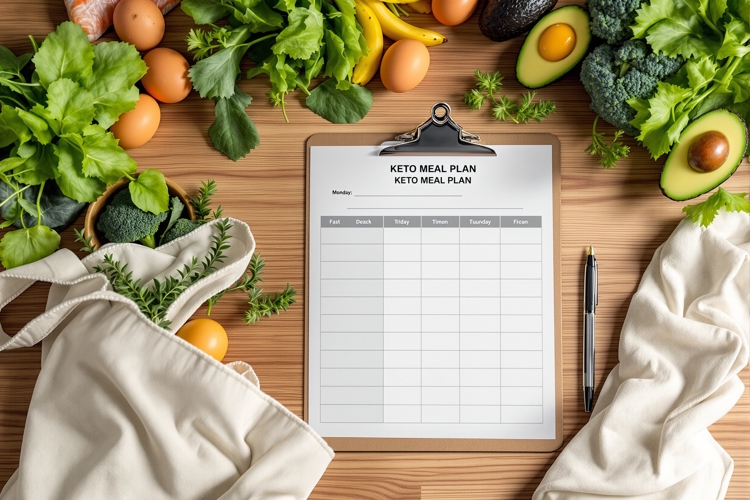
You do not need to invent keto meals from scratch. This is a complete, repeatable seven-day plan built around simple ingredients you can find in any grocery store — plus the exact shopping list so you only go once.
Key Takeaways
- Every day hits roughly 20–25g net carbs
- Meals take 30 minutes or less to prepare
- One grocery run covers the entire week
- Batch-cooking twice saves you hours
How This 7-Day Plan Works
Each day follows the same reliable structure: eggs or dairy at breakfast, a protein-and-greens lunch, and a fat-rich dinner. You will never wonder what to cook again this week.
The plan is designed for a 2,000-calorie target, but every meal can be scaled up or down by adjusting your fat portions.
Day-by-Day Meal Breakdown
Keep it simple and repeat meals where you like them. Consistency beats variety in week one.
- Day 1 — Scrambled eggs with avocado · Chicken Caesar salad (no croutons) · Ribeye with roasted broccoli
- Day 2 — Greek yogurt with berries · Tuna salad lettuce wraps · Salmon with asparagus and butter
- Day 3 — Bulletproof coffee + boiled eggs · Cobb salad · Chicken thighs with cauliflower rice
- Day 4 — Omelet with cheese and spinach · Leftover chicken over greens · Zucchini noodles with meat sauce
- Day 5 — Eggs and bacon · Salmon avocado bowl · Pork chops with sautéed kale
- Day 6 — Chia pudding with almond milk · Chicken salad stuffed avocado · Bunless burger with cheese
- Day 7 — Veggie scramble · Shrimp with garlic butter · Slow-cooker beef with cauliflower mash
The Keto Grocery List
Buy once, eat all week. This list covers every meal in the plan with very little waste.
- Proteins: eggs (2 dozen), chicken thighs, ground beef, ribeye, salmon, shrimp, bacon
- Fats: butter, olive oil, coconut oil, MCT oil, full-fat mayo
- Vegetables: spinach, romaine, broccoli, asparagus, cauliflower, zucchini, kale, avocado
- Dairy: sharp cheddar, parmesan, heavy cream, Greek yogurt
- Pantry: almond milk, chia seeds, olives, nuts, spices
Meal Prep Tips That Save Hours
Two prep sessions — one on Sunday, one on Wednesday — will keep you consistent even on your busiest days.
- Hard-boil a dozen eggs at once
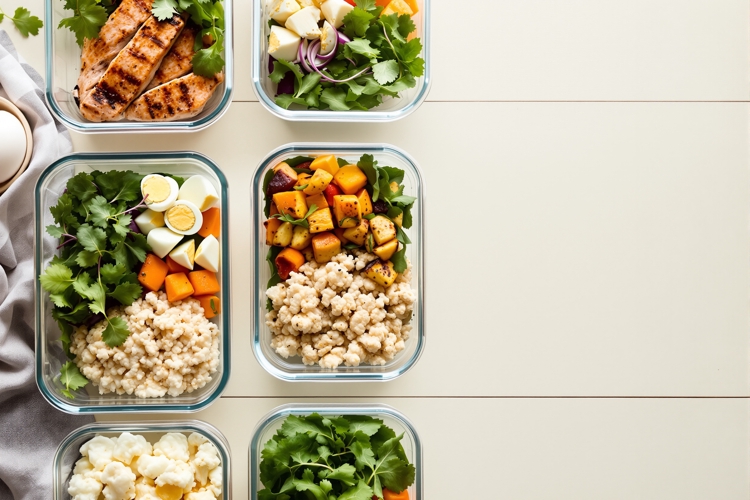
- Batch-cook two proteins and store in glass containers
- Roast a large tray of mixed vegetables
- Pre-portion nuts and cheese so you do not over-snack
How to Make This Plan Yours
This plan is a template, not a rulebook. If you hate salmon, swap it for another fatty fish or chicken thighs with extra butter. If dairy bothers you, trade the yogurt and cheese for avocado, coconut, and a little more olive oil. The structure that matters — a protein, a fat, and a low-carb vegetable at every meal — stays the same no matter what you plug in.
Adjust portions to your appetite and goals. If you are active, add a little more protein and fat; if weight loss is the priority, keep portions steady and let the plan's natural appetite suppression do its work. The best meal plan is the one you actually repeat, so tweak it until it feels easy.
How to Hit Your Macros Without Counting Obsessively
Counting every gram is a useful learning tool for the first two to four weeks, but it is not a strategy anyone sustains forever. The goal of tracking is to build intuition — a sense of what a normal keto portion looks like — so you can eventually judge a plate by eye and stay in ketosis without an app telling you what to do.
A practical shortcut is to think in hands, not grams. A palm-sized portion of protein at each meal covers most people's needs. A thumb of added fat — butter, olive oil, cheese — rounds out the energy. Two fists of low-carb vegetables supply fiber and micronutrients. Anything beyond that is usually a sauce, a dressing, or a snack, and those are where hidden carbs creep in. Once you can build a plate from those three anchors, most days fall into place automatically.
- Protein: one palm-sized portion per meal
- Fat: one to two thumbs of added fat, adjusted to your hunger
- Vegetables: two fists of leafy greens, broccoli, cauliflower, or zucchini
- Track closely for two to four weeks, then shift to eyeballing portions
- Recheck your numbers any time your weight or energy changes direction

Sponsored
Create your own custom Mediterranean diet plan
Answer a few quick questions and get a personalized meal plan built around your goals — free quiz, no account needed.
Take the Quiz NowWhat to Drink on This Plan
Beverages are the sneakiest source of carbs in any diet, and keto is no exception. A single flavored latte, fruit smoothie, or bottle of sweetened iced tea can carry 30 to 50 grams of carbohydrate — more than an entire day's keto allowance. The fix is simple: build your week around a short list of drinks that are naturally carb-free and keep the sweetened options out of the house.
Water, sparkling water, and unsweetened coffee or tea should make up the vast majority of what you drink. Coffee with butter or MCT oil is a popular keto staple because it adds fat without carbs, and a pinch of salt in your water supports electrolyte balance during the first two weeks. If you want something sweeter, choose drinks sweetened with stevia, erythritol, or allulose rather than sugar, and treat them as occasional rather than daily.
- Water and sparkling water — the default
- Black coffee and unsweetened tea, hot or iced
- Bulletproof coffee with butter or MCT oil for morning fat
- Bone broth or salted water for electrolytes in week one
- Occasional sugar-free drinks sweetened with stevia, erythritol, or allulose
Keto Swap List: Easy Substitutions
You do not need to give up the meals you love — you need low-carb versions of the ingredients inside them. Nearly every high-carb staple in a standard meal has a keto swap that performs the same job in the dish, which is why a burger, a pizza, and a bowl of pasta can all live happily inside a keto week.
Start by swapping one category at a time rather than overhauling your entire kitchen. Replace your grain base first, then your sauces and sweeteners, and finally your snacks. That gradual approach keeps meals familiar enough that you actually stick with them, which matters far more than getting the swaps perfectly right on day one.
| Instead of | Use | Best For |
|---|---|---|
| Rice | Cauliflower rice | Bowls, stir-fries, burrito fillings |
| Pasta | Zucchini noodles or shirataki noodles | Meat sauce, alfredo, cold salads |
| Bread | Lettuce wraps or almond-flour bread | Sandwiches, burgers, toast |
| Potatoes | Roasted radishes or cauliflower mash | Sunday dinners, sides |
| Sugar | Erythritol, allulose, or stevia | Desserts, coffee, sauces |
Your One-Trip Keto Grocery List
The easiest way to make a week of keto meals feel effortless is to shop once with a clear list and stop improvising at the store. A well-built keto cart covers four categories: proteins, fats, low-carb vegetables, and a small number of pantry extras. If you buy two or three items from each category, you have enough raw material to assemble every meal in a seven-day plan without a second trip or a midweek scramble.
Start with proteins, since they anchor every plate. Choose whatever is on sale — chicken thighs, ground beef, pork chops, salmon, or shrimp — plus a dozen eggs and a couple of canned fish for fast meals. Then add fats: butter, olive oil, and a block of cheese go a long way. Fill the rest of the cart with low-carb vegetables like spinach, broccoli, cauliflower, zucchini, and bell peppers, and finish with pantry basics such as mayonnaise, mustard, herbs, and spices that make the same ingredients taste different from meal to meal.
- Proteins: eggs, chicken, ground beef, salmon or a white fish, canned tuna
- Fats: butter, olive oil, mayonnaise, block cheese, heavy cream
- Vegetables: spinach, broccoli, cauliflower, zucchini, bell peppers, avocado
- Pantry: mustard, herbs, spices, garlic, vinegar, unsweetened broth
- Extras: nuts, olives, pickles for snacking and salad crunch
Batch Cooking Without Getting Bored
Batch cooking is the difference between a plan that survives Wednesday and one that collapses by Tuesday evening. The trick is not cooking seven identical meals, which guarantees boredom, but cooking a few versatile components that can be recombined in different ways. Roast a tray of chicken thighs, brown a pound of ground beef, hard-boil six eggs, and steam a large batch of broccoli. That single hour of work gives you the building blocks for a week of varied meals.
From those components you can assemble a chicken-and-avocado salad on Monday, a beef-and-cauliflower skillet on Tuesday, and an egg-and-spinach scramble on Wednesday without cooking from scratch each night. Changing only the sauce or the vegetable is enough to make a meal feel new, even when the protein is the same. Store components separately in clear containers so you can see what you have and reach for it before reaching for delivery apps.
Keep your batch sessions realistic. Two hours of cooking every Sunday is far better than an ambitious five-hour plan you abandon after the first week. Start with proteins and hard-boiled eggs, add one roasted vegetable, and build from there as the habit takes hold. The goal is a fridge that answers the question of what to eat before hunger asks it for you.
- Cook versatile proteins, not seven identical meals
- Roast one tray of vegetables and steam one large batch of greens
- Store components separately so meals feel fresh each night
- Start with a two-hour session and expand only if it feels easy
Frequently Asked Questions
Each day lands around 20 to 25 grams of net carbs, which keeps most people firmly in ketosis while leaving room for vegetables. If you want to be more aggressive, trim the dairy and nut portions; if you want more flexibility, add a small serving of berries or extra greens.
Absolutely. The plan is designed to be flexible, so repeat meals you enjoy and skip the ones you do not. What matters is the overall structure — a protein, a fat, and a low-carb vegetable at every meal — rather than matching any specific day exactly.
You can adapt the plan by swapping the meat proteins for eggs, tofu, tempeh, full-fat Greek yogurt, and paneer. Keep an eye on your protein and make sure you are still getting enough fat from sources like avocado, olive oil, and nuts to stay satisfied and in ketosis.
Beyond the scale, watch for steady energy between meals, fewer cravings, and a gradual drop in appetite — all signs your body is adapting to fat as fuel. Give it at least two weeks before judging results, since the first week's changes are largely water weight.
Absolutely, and for the first week it often helps. Repetition removes the decision fatigue that causes most slips, and it makes shopping far simpler. Choose one breakfast, one lunch, and one dinner you genuinely enjoy, then rotate them until they feel automatic. Add variety in week two once the habit is established — variety is a tool for long-term adherence, not a requirement for starting.
Swap the protein or the vegetable rather than the whole dish. The structure — a protein, a low-carb vegetable, and a healthy fat — is what keeps you in ketosis, not any specific ingredient. If you dislike salmon, use chicken thighs. If you dislike broccoli, use roasted cauliflower or zucchini. Keeping the shape of the meal while changing the parts is the easiest way to make the plan truly yours.
References
Sponsored
Ready to build your own Mediterranean keto plan?
Take the free quiz and get a personalized meal plan tailored to your goals, lifestyle, and food preferences — no account required.